
Digital violence is a malicious and increasingly pervasive form of gender-based violence (GBV). Online stalking and harassment are used to intimidate and silence women and girls, particularly those with greater online presence, such as activists, social and political leaders and young women.
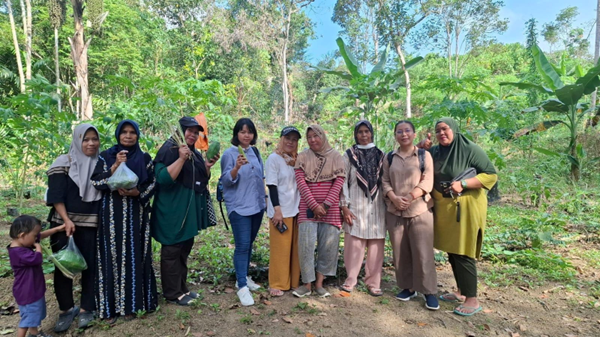
An UICN, Resilient, Inclusive and Sustainable Environments (RISE) Challenge-funded project in the Philippines, Thailand and Indonesia addressed this growing threat of technology-facilitated GBV.1 Led by the Asia Indigenous Peoples Pact Foundation (AIPP), the “Empowering Indigenous Women Environmental Human Rights Defenders in Asia” project revealed the extent to which digital violence can impact women, particularly Indigenous women environmental human rights defenders. Facing intersecting forms of discrimination and violence, these women fight to protect their communities from displacement, exploitation and disenfranchisement, as well as to preserve customary lands and natural resources.
Participants in the project highlighted the prevalence of online violence as a key issue that Indigenous women and girls face in Asia. In particular, online violence was used as a tool to discourage and punish Indigenous women from speaking publicly on community rights related to the environment. For instance, in the aftermath of the destruction of Indigenous coastal communities due to a tropical storm in the Philippines, one Indigenous woman experienced harassment and received threats via social media. She had denounced the lack of relief services and the law forbidding construction within a certain distance of the ocean, which prevented the communities from rebuilding their homes and prolonged their displacement.
In some cases, digital tools facilitated deliberate attacks to discredit and impede the work of Indigenous women protesting mining and dam projects and advocating for women’s rights. Posts on social media spread misinformation, including accusing the women of engaging in terrorist activities and hate speech, in some cases, originating from fake accounts and local and national authorities.
The project also dealt with the reality that digital tools can enable violence that takes place in real life, such as sexual assault, abuse and femicide. Young women and girls can be particularly at risk of online grooming and sexual exploitation, and perpetrators are rarely brought to justice. These risks can be compounded for women and girls who are members of marginalised groups, such as Indigenous communities or religious minorities.
By strengthening community relationships and solidarity between Indigenous women environmental human rights defenders, locally, nationally, and internationally, establishing emergency support mechanisms for activists who may come under threat or attack, and ensuring that women are confident in their rights, including under international frameworks, IUCN, AIPP and their partners helped to combat the harmful effects of digital GBV. As much as the Internet has been co-opted by actors seeking to tear down and intimidate women who speak out for their rights and for environmental protection, it is equally a powerful tool for those working towards gender equality and environmental justice, a source of connection for advocates and practitioners. IUCN, its partners and donors remain committed to using all available tools in the pursuit of inclusive conservation.
1The RISE Challenge is a first of its kind granting mechanism that supports activities designed to address gender-based violence and environmental linkages in environmental and climate related programmes. It is funded by the Norwegian Agency for Development Cooperation (Norad) and was previously funded by the United States Agency for International Development (USAID).
Esta entrada de blog se ha escrito en el contexto de 16 días de activismo contra la violencia de género 2025.