

Understanding Carbon Markets: Beyond the Headlines
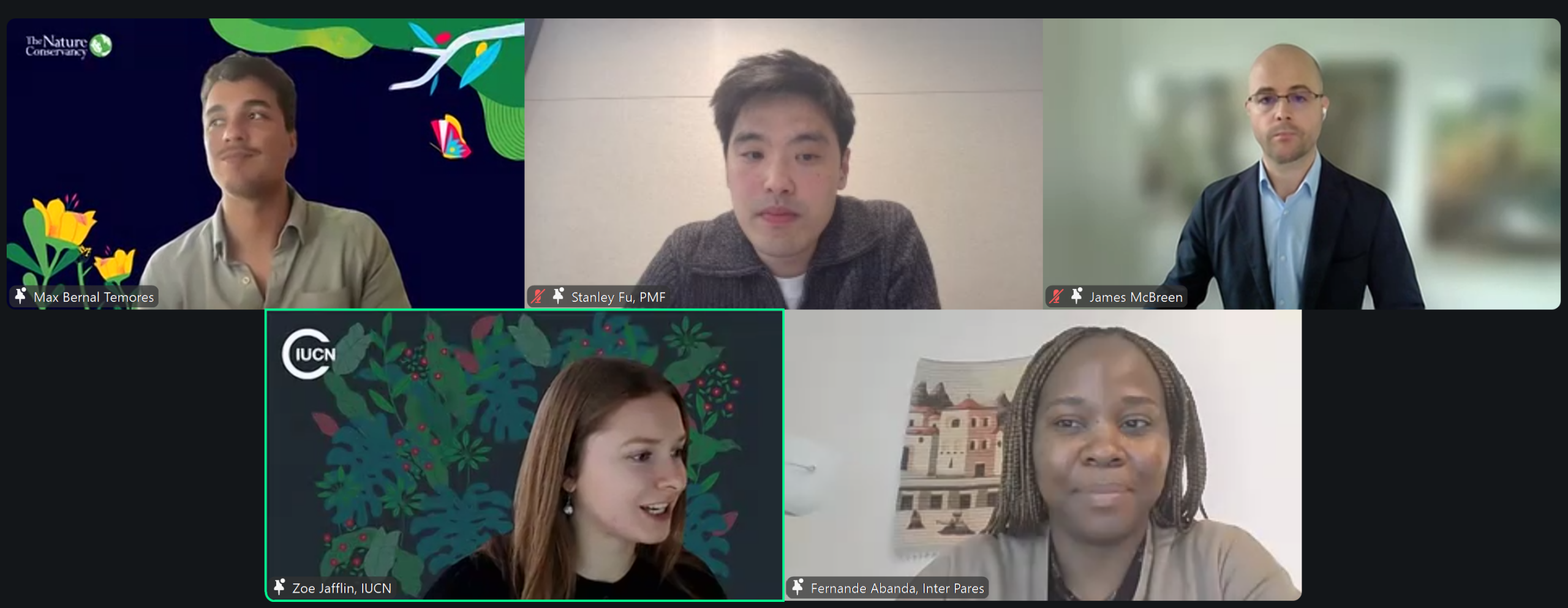
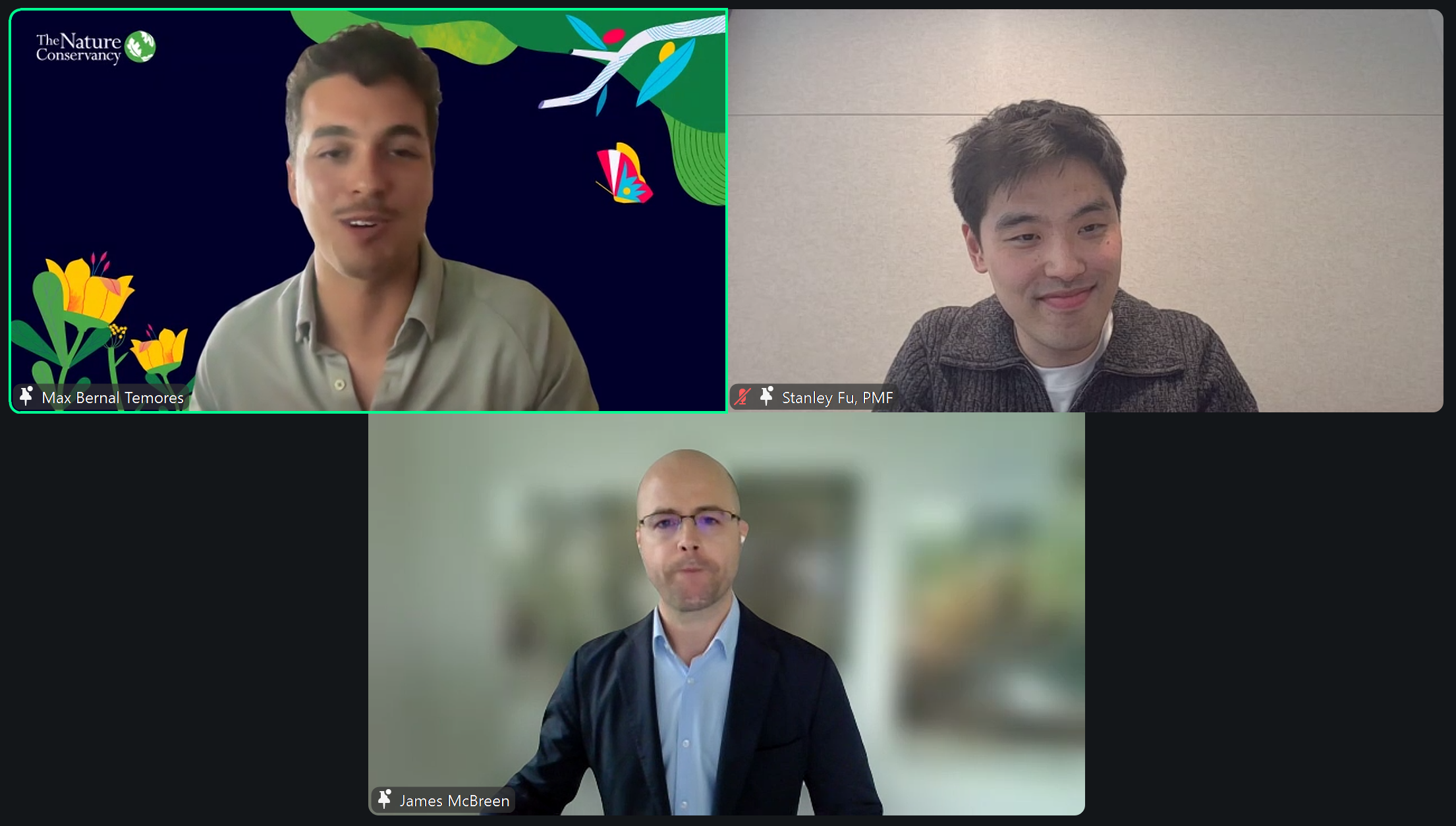
Opening the session, Maximiliano Bernal Temores, Carbon Markets Associate at The Nature Conservancy (TNC), provided an accessible overview of carbon finance and the different types of carbon markets currently operating globally.
At its simplest, a carbon credit represents one metric tonne of carbon dioxide reduced or removed from the atmosphere. But behind every credit lies a complex system of methodologies, standards, and verification processes designed to ensure environmental credibility.
Max explained how projects are generally divided into:
- Nature-based projects, such as mangrove restoration, forest conservation, and peatland protection
- Technology-based projects, including engineered carbon removal solutions
He also highlighted the growing role of “meta-standard” initiatives such as the Integrity Council for the Voluntary Carbon Market (ICVCM), which have emerged in response to increasing scrutiny over carbon credit quality and integrity.
Recent years have seen growing criticism of carbon markets, particularly around questions of baseline emissions, calculations, permanence risks, additionality, transparency and governance. At the same time, Max stressed that high-integrity carbon finance can play an important complementary role in climate mitigation when paired with ambitious decarbonisation efforts.
“Carbon credits are not a substitute for decarbonisation — they are a complement,” he noted.
The discussion also underscored that carbon finance can provide benefits beyond emissions reductions, including biodiversity conservation, ecosystem restoration, and support for Indigenous Peoples and local communities.
From Ideas to Investible Solutions
The session then shifted toward innovation and project development, with James McBreen, Senior Programme Manager of Technology & Innovation at IUCN presenting insights from the organisation’s emerging work on climate finance and investible NbS solutions.
Through mechanisms such as the WALD Innovation Facility, supported by the German Federal Ministry for Economic Cooperation and Development (BMZ) and German bank KfW, IUCN is helping identify and de-risk climate solutions that show strong potential for biodiversity and community outcomes but are not yet ready for large-scale investment.
Participants heard how projects are being designed around four dimensions of integrity: ecological, social, financial, and institutional.
The discussion highlighted the importance of robust science, governance, and safeguards in building credible nature-positive finance mechanisms.
Examples included:
- Using the RHINO framework and STAR metric to assess biodiversity outcomes;
- Embedding gender-responsive governance structures;
- Applying Free, Prior and Informed Consent (FPIC) processes early in project development; and
- Strengthening tenure rights and co-management approaches.
James also emphasized the growing importance of innovation in:
- Monitoring, reporting, and verification (MRV);
- Digital tools for biodiversity and carbon monitoring;
- Blended finance structures; and
- Early-stage risk reduction mechanisms.
These approaches aim to strengthen confidence among investors while ensuring projects remain grounded in local priorities and ecological realities.
Blending Carbon Finance and Insurance for Coastal Resilience
One of the most engaging discussions of the session focused on innovative approaches to combining carbon finance with parametric insurance to support climate resilience.
Stanley Fu, Business Developer at the Princess Margriet Fund, Red Cross Netherlands, shared how integrated financing models are being explored to protect and restore mangrove ecosystems while also supporting vulnerable coastal communities facing increasingly severe climate impacts.
Mangroves play a critical role in reducing storm surge impacts, protecting coastlines, supporting biodiversity and storing blue carbon, yet restoration efforts often struggle with unstable or insufficient funding.
The proposed model combines carbon finance, insurance mechanisms catalytic donor funding, and trust fund structures. This blended approach aims not only to support ecosystem restoration, but also to provide rapid payouts after climate disasters to help communities recover and restore damaged ecosystems.
The discussion illustrated how adaptation, biodiversity conservation, and finance can reinforce one another when designed holistically.
As Stanley noted, protecting ecosystems ultimately helps protect people.
Integrity, Trust, and Community Participation
A recurring theme throughout the webinar was the importance of ensuring that carbon finance mechanisms genuinely benefit communities and avoid reproducing inequities.
Speakers repeatedly stressed that:
- Communities must be engaged early through co-design processes;
- Benefit-sharing mechanisms must be transparent;
- Projects should deliver diversified benefits beyond carbon alone; and
- Trust and legitimacy are essential for long-term success.
Participants also discussed the need to ensure carbon markets do not delay decarbonisation efforts globally.
Rather than serving as a licence to continue emitting, high-integrity carbon finance should support hard-to-abate sectors while accelerating investment in climate and biodiversity solutions.
Looking Ahead
The first session of the Wednesdays of Finance series demonstrated both the complexity and the potential of innovative finance mechanisms for climate and nature.
While carbon markets remain highly debated, the discussion highlighted growing efforts to strengthen integrity, improve governance, and ensure that finance mechanisms contribute meaningfully to biodiversity conservation, climate resilience, and equitable development.
As global demand for nature-positive finance solutions continues to rise, one message stood out clearly throughout the session: Finance alone is not enough — integrity, governance, science, and community leadership are essential to ensuring that climate finance delivers real outcomes for people and nature.
Watch the recording from Session 1 here and access the slides in English here and in French here.
The series continues on 13 May 2026 with Session 2: “How Biodiversity Drives Finance”, exploring biodiversity credits, environmental impact bonds, and emerging approaches to biodiversity finance. Register here.