

FAQs
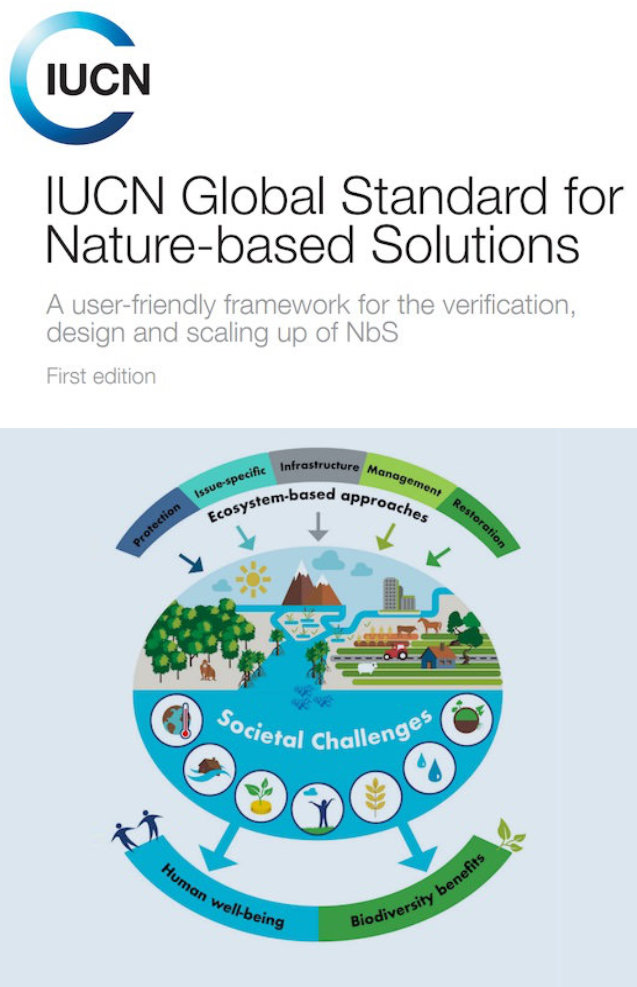
IUCN Global Standard for Nature-based Solutions•1/4 FEATURED FAQs
What is the NbS Standard for?
To provide measurable guidance on design gaps and opportunities of a Nature-based Solution and to improve implementation and capture lessons learned. A user can use it to conduct a gap-analysis with a set of standardised indicators as measures. Further guidance on how to use the standard is also available.
NbS concept and definition•2/4 FEATURED FAQs
Whom can NbS be useful for?
Sectors across the world which deal with providing human wellbeing needs mentioned above, be it Governments, companies or non-profit organisations. Additionally, NbS is useful for conservation actors to leverage, as it could make conservation interventions longer lasting through local ownership. Local populations involved will likely give more value to conservation actions when they simultaneously help meet human wellbeing needs instead of prioritising otherwise.
NbS for Climate Adaptation and Resilience•3/4 FEATURED FAQs
How can NbS support achieve climate targets?
NbS offers a strong pathway for climate adaptation if integrated in countries’ Nationally Determined Contributions, National Adaptation Plans and their Long-Term Low Emission Development Strategies. In the context of climate mitigation, while NbS supports mitigation actions, it should be only complimentary to an ambitious strategy for reducing Green House Emissions.
How to use the Standard•4/4 FEATURED FAQs
How to start a self-assessment process?
After creating your account on the online self-assessment tool, we recommend the following steps for initiating and completing your self-assessment:
Document Exchange: Collect all relevant documentation related to your project to support your assessment. This includes reports, data sheets, and project outlines.
Project level kick-off calls and identifying focal points: Organize meetings with your project partners to discuss the assessment requirements and the individuals that will contribute to the assessment process – for example your gender and governance specialist. We advise appointing a focal point for your assessment to coordinate and consolidate inputs.
Complete a rough and fast assessment: Please conduct a preliminary assessment using the self-assessment tool, aiming to cover all 8 criteria within 2-3 hours. This rapid assessment will help identify key areas of focus and the interlinkages between various indicators.
Complete a detailed assessment: After completing the first fast assessment, refine and finalize your assessment by providing detailed rationales and implementation tools. Don’t forget to save your input into the assessment!.
NbS concept and definition
Core concepts and definitions so teams use “NbS” precisely and consistently.

NbS for Climate Adaptation and Resilience
How NbS reduces climate risks and builds resilience for people and ecosystems.

Partnerships for achieving common goals and targets
Working with governments, NGOs and communities to scale impact and meet shared targets

IUCN Global Standard for Nature-based Solutions
What the Standard is, its criteria, indicators and how it ensures quality for NbS.

How to use the Standard
Practical guidance to apply the IUCN Global Standard for Nature-based Solutions in real projects.