
Ottawa, Canada, February 2026 — A chocolate bar in Canada begins thousands of kilometres away, in a cocoa field in West Africa. When climate stress hits cocoa farms in Côte d’Ivoire or Ghana, supply chains tighten. In 2024, cocoa prices surged to record highs, and shoppers in Toronto felt the impact.
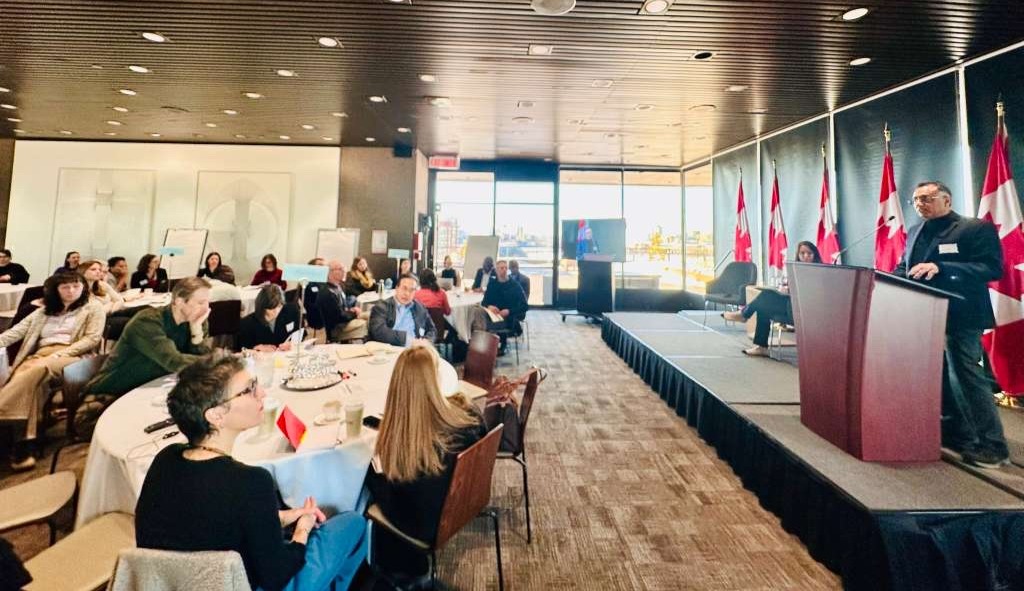
© IUCN – Ali Raza Rizvi, IUCN
This powerful example introduced by Ali Raza Rizvi, IUCN Global Climate Change and Energy Transition Team Director, set the tone for a side event supported by IUCN during International Development Week 2026, where Global Affairs Canada (GAC) and NAbSA (Nature-based Solutions for Climate Adaptation: Monitoring & Impact Evaluation) convened the Partnering for Climate (P4C) community at GAC’s Conference Centre in Ottawa. The message was clear: investing in nature is not charity — it is economic resilience.
Nearly half of global GDP depends on nature. Yet, annual investment in nature-based solutions (NbS) must more than double by 2030 to meet climate and biodiversity goals. While public finance currently makes up the vast majority of NbS funding, it remains insufficient. Meanwhile, environmentally harmful subsidies continue to outweigh positive climate investments.
Against this backdrop, the gathering brought together policymakers, practitioners, civil society, and knowledge partners to explore how to align climate and biodiversity action with economic stability — and how to move from fragmented responses to coherent, scaled solutions.
Linking Policy, Finance and Nature
The morning opened with strategic updates from GAC on P4C and the International Biodiversity Program (IBP), outlining priorities in climate finance, biodiversity monitoring, Indigenous partnerships, and scaling nature-positive investments.
Speakers emphasized that climate and biodiversity risks are converging — driving food insecurity, inflation, and supply-chain volatility worldwide. The solution lies in policy coherence: embedding NbS targets across national climate plans, biodiversity strategies, and land-use frameworks, while strengthening inclusive governance and accountability.
Building on this evidence, IUCN’s Enhancing Nature-based Solutions for Accelerated Climate Transformation (ENACT) Partnership proposed a set of practical actions to close the implementation gap. These include aligning national frameworks by embedding clear NbS targets across NDCs, NBSAPs, national adaptation plans and Land Degradation Neutrality strategies; mainstreaming NbS as a core delivery tool across agriculture, forestry, water and urban policy; and translating agreed NbS decisions under the Rio Conventions directly into national legislation and programming.
The session also emphasized the need to scale dedicated, additional and accessible NbS finance within national strategies; strengthen inclusive governance by ensuring the participation of Indigenous Peoples, local communities, women and youth in planning and implementation; and establish transparent monitoring and reporting systems to track progress and outcomes.
The session underscored a key finding from the 2026 State of Finance report: restoring degraded land can generate between US$7 and US$30 in benefits for every US$1 invested — combining climate mitigation, adaptation, food security, and livelihoods.
Storytelling as a Policy Tool
A dedicated session on “Communicating Impact” explored how storytelling can shape public engagement and policy influence. Featuring examples from partners and BBC StoryWorks, the discussion highlighted how narratives grounded in real communities can translate complex finance and biodiversity concepts into relatable stories.
Participants examined how projects can better communicate economic and moral incentives for NbS to different audiences — from stabilizing food prices to strengthening local livelihoods — and how storytelling can be embedded from project design to reporting.
Watch two short films released as part of ‘Living Legacy’, a collaboration between BBC StoryWorks and IUCN, of two NAbSA supported projects, ReSea by Mission Inclusion in Kenya and Natur’ELLES by Socodevi in Senegal.
Reflecting on the past year and looking ahead
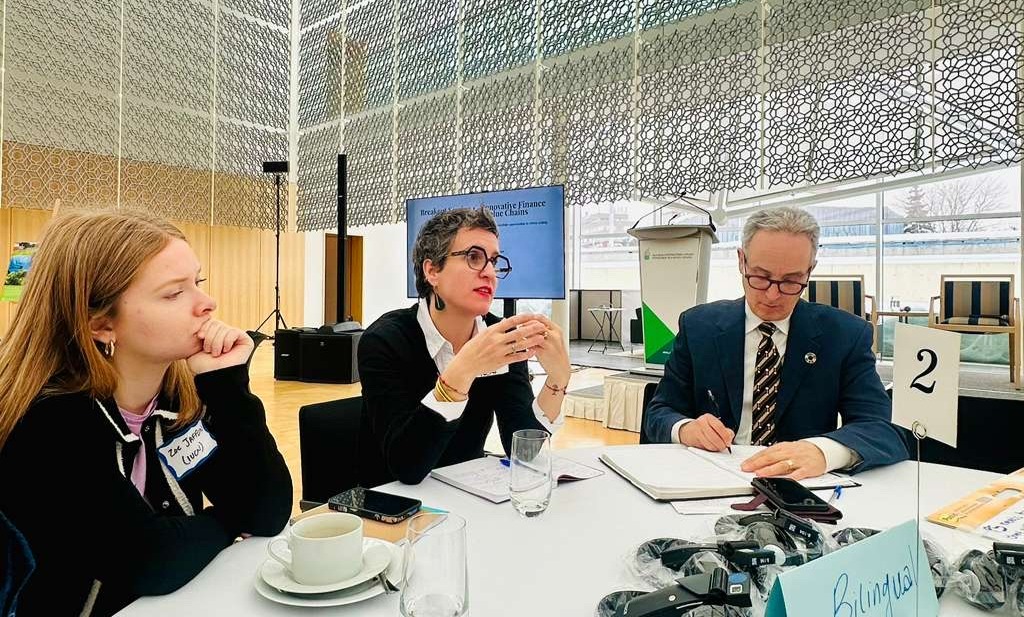
Ali Raza Rizvi framed the next session as a moment to shape the partnership’s future amid changing political landscapes. Zoe Jafflin, IUCN Programme and Grants Associate for NAbSA reflected on the P4C community’s significant 2025 milestones, including:
- 1,550+ stakeholders engaged through knowledge exchanges and events;
- 5 task forces established to support feedback and connections;
- 20+ dialogues and webinars held across regions;
- 14 knowledge products developed capturing field-based evidence;
- 2 guidance documents on using IUCN’s Species Threat Abatement and Restoration (STAR) metric to support nature-positive outcomes and biodiversity goals supported;
- 7 networks engaged to strengthen collaboration.
Building on these achievements, Verónica Ruiz Garcia, IUCN Senior Climate and Resilience Manager and NAbSA coordinator, outlined NAbSA’s 2026 priorities — the final year under the current P4C funding cycle. Plans include rolling out its Operational Framework, expanding case studies and catalogues, launching training curricula, strengthening its website as a knowledge hub, and scaling storytelling tools such as impact maps and storybooks.
Key global milestones — including UNCCD COP17 in Mongolia, CBD COP17 in Armenia, and UNFCCC COP31 in Türkiye — will provide opportunities to elevate lessons from the P4C community to international policy arenas.
A Shared Commitment to Coherence
Throughout the event, one theme resonated: climate stability, biodiversity protection, and affordable supply chains depend on coherent global investment and policy action.
The cocoa example may be just one story — but it reflects a broader truth. What happens in climate-exposed landscapes affects markets, communities, and economies everywhere.
As International Development Week continued, GAC and NAbSA reaffirmed their commitment to building partnerships that align finance, policy, and practice — ensuring that NbS are not peripheral, but central to climate transformation.
Because strengthening nature is strengthening resilience — at home and abroad.
About NAbSA:
The NAbSA initiative is coordinated by IUCN’s Global Climate Change and Energy Transition Team and is part of GAC’s P4C community. Together with other P4C projects as well as Canada’s Nature-positive initiative, NAbSA drives NbS for climate adaptation, fostering resilience, biodiversity conservation, and sustainable development.
Learn more about NAbSA here.