
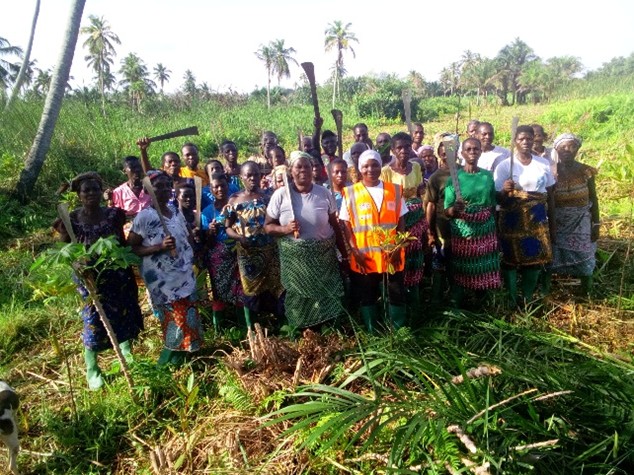
In the locality of Ahalivémé, located west of the canton of Anfoin in the commune of Lacs 4, the complete absence of mangroves exposed communities to multiple vulnerabilities: riverbank erosion, seasonal flooding, depletion of fish stocks, and loss of biodiversity. This situation limited local economic opportunities, particularly for women who depend on fishing and natural resources for their income, and exacerbated ecological fragility in the face of climate change.
From a feminist perspective, this degradation disproportionately affected women, who were often responsible for collecting wood, fish, and food. They were thus the first to be impacted by the disappearance of the mangroves. From a climatic standpoint, the absence of this ecosystem severely reduced the community’s resilience to flooding, erosion, and rising sea levels, making any restoration and sustainable management action urgently needed.
The central problem was therefore the degradation of coastal ecosystems and the increased vulnerability of local communities, exacerbated by the lack of organized community structures for environmental protection and sustainable management. The challenge was to preserve natural resources while ensuring sustainable livelihoods, by mobilizing the community and strengthening local capacities for effective environmental management.
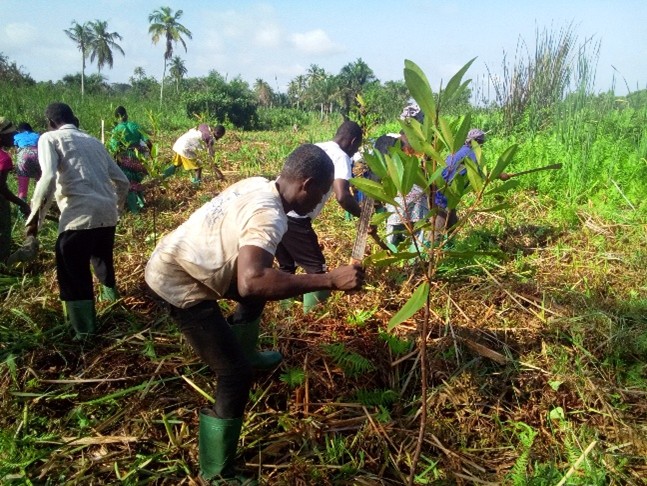
Thanks to the intervention of the ACF-AO project, an integrated solution was implemented, combining awareness-raising, technical training, and community mobilization. The population of Ahalivémé became aware of the risks associated with the absence of mangroves and the benefits of their restoration for the environment and livelihoods. This awareness led to the creation of local management committees tasked with protecting the mangroves and establishing strict rules for their preservation. For example, anyone cutting down or uprooting a mangrove seedling must pay a fine of 5,000 FCFA, replant 10 seedlings, and participate in two site-maintenance sessions, thus setting an example for the rest of the community.
INADES-Formation Togo played a crucial role in strengthening the technical capacities of local stakeholders through training on nursery production and reforestation techniques. The management committees, women’s committees, and the Minodou cooperative put these skills into practice to organize reforestation and monitor the sites. Other actors, such as AVOTODE, local authorities (CVD, CCD, etc.), and community volunteers, contributed to awareness-raising and monitoring, creating synergy among the various stakeholders.
The results are significant: 5 hectares of mangrove have been restored in Ahalivémé, transforming an area previously devoid of ecosystem into a living, protected, and collectively managed ecological space. This initiative goes beyond simply planting trees: it integrates structured reforestation practices, strengthens local technical capacities, and mobilizes the community, particularly women, around environmental protection and climate resilience.
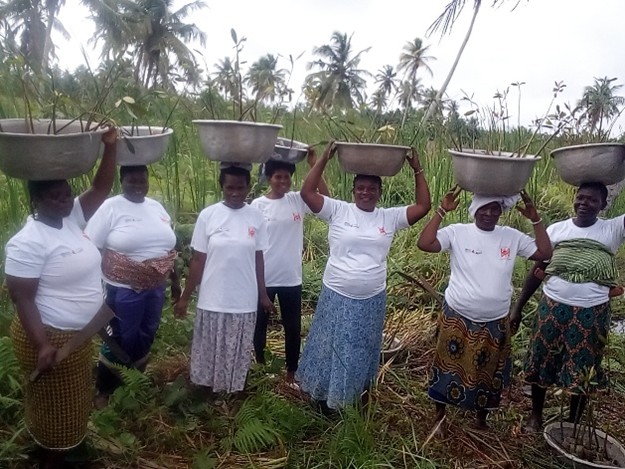
The observed changes go beyond ecological restoration. Women members of the committees and the Minodou cooperative have adopted new sustainable management practices, such as producing quality seedlings and regularly monitoring reforestation efforts. Attitudes have shifted: the mangrove is now seen as a valuable collective asset, and residents are actively involved in its protection. Local biodiversity is showing signs of recovery, with the return of plant and animal species to the reforested area, while the community is strengthening its resilience to erosion, flooding, and dwindling fish stocks.
Three main lessons have emerged from this experience:
- The importance of community mobilization and awareness-raising: Raising awareness of the risks associated with mangrove loss was a key driver for the creation of management committees and the establishment of local rules.
- The value of strengthening technical capacities: Training local stakeholders in nursery production and reforestation techniques ensured the quality of seedlings, the success of reforestation efforts, and the sustainability of the initiative.
- The effectiveness of accountability and exemplary behavior mechanisms: Establishing community rules (fines, replanting, site maintenance) fostered collective commitment and prevented the abandonment of plantations.
Today, the restoration of the mangrove in Ahalivémé represents a particularly important and innovative change: it has transformed an area completely devoid of ecosystem into a living, protected, and collectively managed space. It concretely demonstrates how capacity building, especially for women, can generate a lasting ecological, social, and economic impact, and become an inspiring example for the entire community.